

Property Review – October 2026
| Buyer demand weakened in September, although enquiry levels remain considerably stronger than they were six months ago | Government funding is being directed towards revitalising high streets, bringing vacant properties back into productive community use | Prime housing markets remain relatively resilient, with cash buyers accounting for more than half of transactions this year |
Housing market softens
The residential property market experienced a setback in September, according to the latest survey from the Royal Institution of Chartered Surveyors (RICS).
New buyer enquiries fell to a net balance of -22% last month, down from -18% in August, marking the first decline since March 2026. However, this latest reading is a significant improvement on -41% recorded six months earlier. Agreed sales fell slightly to a net balance of -18% but remain above the three-month average of -25%. Expectations for sales over the next three months softened from -6% to -3%. The survey suggested that supply may be increasing, with new sales instructions posting a net balance of +6% – the first positive reading since mid-2025.
Head of Market Research and Analysis at RICS, Tarrant Parsons, commented: “A renewed rise in interest rate expectations has created a fresh headwind for the housing market, with buyers becoming a little more cautious and sales activity losing some momentum this month.”
Prime markets show stability
Despite ongoing political uncertainty, prime property markets have remained relatively stable, according to Savills.
Prime house prices have fallen, but in Q3 they declined at a slower pace than in Q2. In the face of fluctuating borrowing costs, cash buyers have accounted for more than half of prime purchases so far this year. Price sensitivity remains, with sellers often competing for interest due to a build-up of unsold prime properties. Buyers have been particularly selective in prime central London, where secondary and overpriced stock has proved much harder to sell. Meanwhile, prime markets have been most resilient in the Midlands, North of England, Scotland and Wales.
Frances McDonald, Director of Residential Research at Savills, said, “The experience of the past year tells us that activity doesn’t necessarily depend on perfect market conditions. Buyers and sellers have continued to transact, adapting their expectations to an evolving economic and political environment.”
Government announces new FTB scheme
The government has confirmed a new first-time buyer (FTB) scheme, details of which will be announced at the Budget.
Your First Home is expected to help FTBs purchase a new-build home with a 2.5% deposit, supported by a 20% government-backed equity loan. This Help-to-Buy style loan will have an initial interest-free period, the length of which has yet to be announced. Under this proposed scheme, buyers would need a mortgage that is 77.5% of the property’s value. The government has said the scheme could save buyers hundreds of pounds a month compared with a 95% loan-to-value (LTV) mortgage.
Your First Home will only be available on new-build properties from a participating developer. Full details will be announced at the Budget on Wednesday 28 October. The scheme is not to be confused with the First Homes Scheme, which offers FTBs discounts of at least 30% and up to 50% on selected homes.
Reviving the high street
The government has pledged to help boost local high streets as part of a £210m funding package.
Prime Minister Andy Burnham announced a £125m Derelict Buildings Fund, supporting local authorities to transform derelict high street buildings into shared workspaces, cafes and community hubs. Speaking at the Labour Party Conference, Burnham said, “Too many high streets have been left to hollow out, leaving town centres a shell of what they once were. That must change, and today’s funding will help put power back into the hands of locals who know their area best.”
An additional £65m will be invested in helping communities revamp buildings and businesses at risk of closing down, such as sports clubs and pubs. A further £10m will go towards High Street Rental Auctions, allowing local leaders to auction off premises which have been vacant for 12 months or more. Another £10m will be invested in a new Co-operative Development Programme.
UK logistics market update
The logistics market recorded investment of £2.6bn in Q3, according to Knight Frank, making it the strongest quarter so far this year.
Private equity accounted for the majority of investment in 2026 (34%), followed by institutional investors (31%). In Q3, occupier take-up totalled 9.1 million sq. ft, taking the year-to-date total to 28.8 million sq. ft. Over half (54%) of take-up in 2026 is attributed to Grade A, new or refurbished space, followed by second-hand Grade B or lower-quality space at 38%. The overall vacancy rate has increased from 7.5% at the end of 2025 to 8.1% at the end of Q3.
So far this year, approximately 10.1 million sq. ft of industrial and logistics space has been completed. Total development output is projected to reach 18.4 million sq. ft by the end of 2026, which is above the 16.4 million sq. ft completed last year but below levels recorded in 2021-23.
Spotlighting the UK’s garden centres
A report from Savills has shown that garden centres make a positive contribution to the economy.
Gardening contributes £38bn to UK GDP, with £5.7bn of this coming from garden retail. Households are estimated to spend a total of £9bn on garden retail annually, while garden centres attract 200 million visits every year. There are currently between 1,500 and 2,300 garden centres and retail nurseries in the UK, most of which are owned by individual independent operators. However, many of the larger garden centres are owned by groups. The Top 10 operators own about 310 sites between them, with British Garden Centres accounting for the most at 80 sites, having acquired 20 since 2022.
Tom Whittington, Director of Commercial Research at Savills, commented, “Despite ongoing summer heatwaves, July saw a boost in garden centre sales, at the same time that other retail environments saw falls in footfall by as much as -6%.”
12-month capital value expectations across mainstream sectors
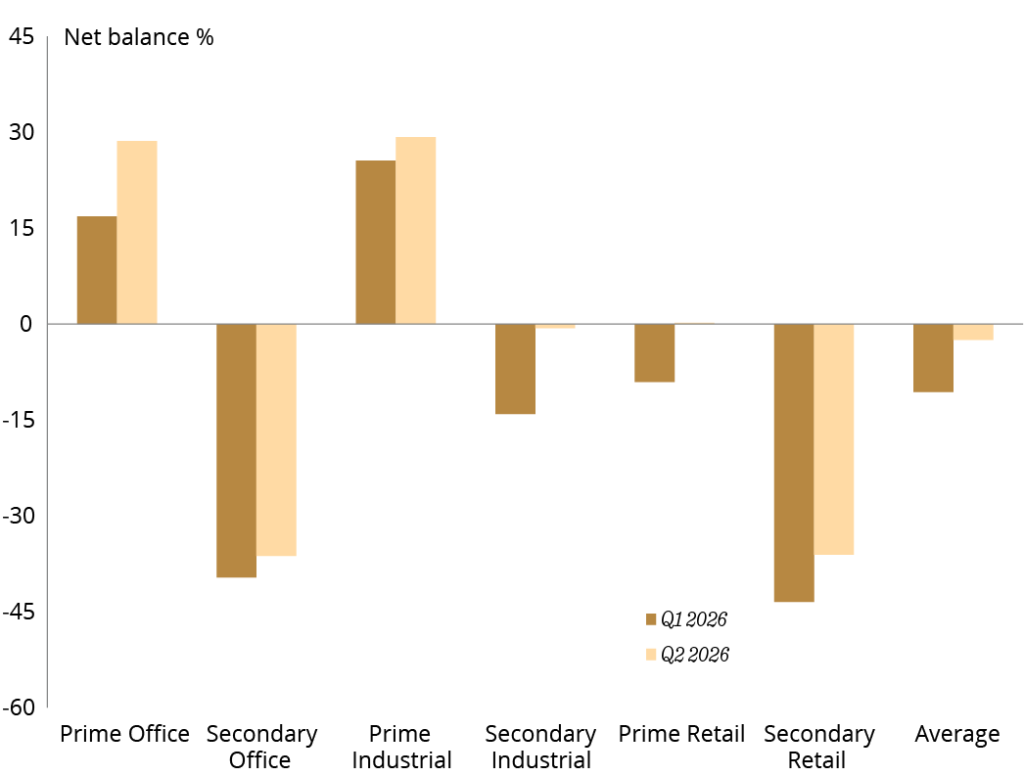
- Capital value expectations remain comfortably positive for prime offices and industrials at +29% for both sectors
- Projections for capital values remain broadly flat for prime retail and secondary industrial assets
- Respondents continue to anticipate declines in secondary office and retail values.
12-month rent expectations across mainstream sectors
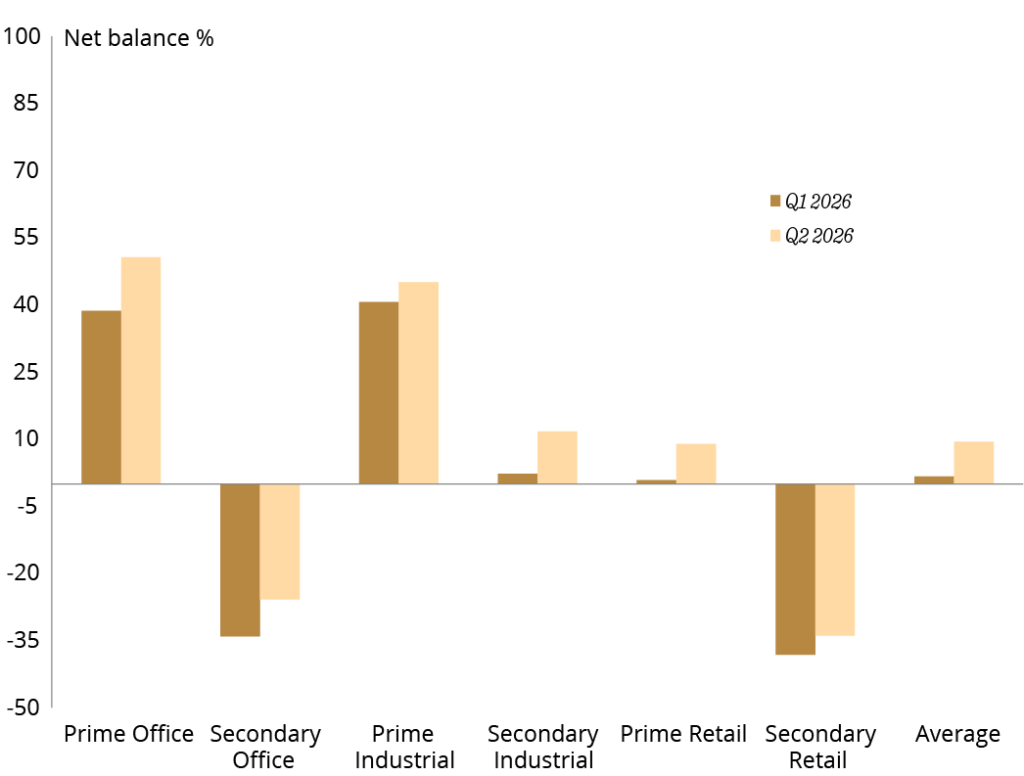
- Prime offices exhibit the strongest rental growth expectations, with a net balance of +51%, up from +39% previously
- A net balance of +45% of respondents expects prime industrial rents to increase over the next twelve months, up from +41% in the previous quarter
- Secondary industrial rents are expected to rise over the coming year, with a net balance of +12% of respondents anticipating growth.
It is important to take professional advice before making any decision relating to your personal finances. Information within this document is based on our current understanding and can be subject to change without notice and the accuracy and completeness of the information cannot be guaranteed. It does not provide individual tailored investment advice and is for guidance only. Some rules may vary in different parts of the UK.
(All details are correct at the time of writing 21/10/26)
Stay informed with the latest
Receive relevant financial news and updates directly to your inbox.